Comfort kit
Neck pillows, light blankets, layered clothing, eye masks, and a small pouch for motion sickness, allergies, headaches, and daily medication.
Packing List
If the car is full before the cooler goes in, you are packing for anxiety instead of the trip. Build one reachable day bag, one food-and-cleanup kit, and one car-safety kit so the useful things are not buried under suitcases.
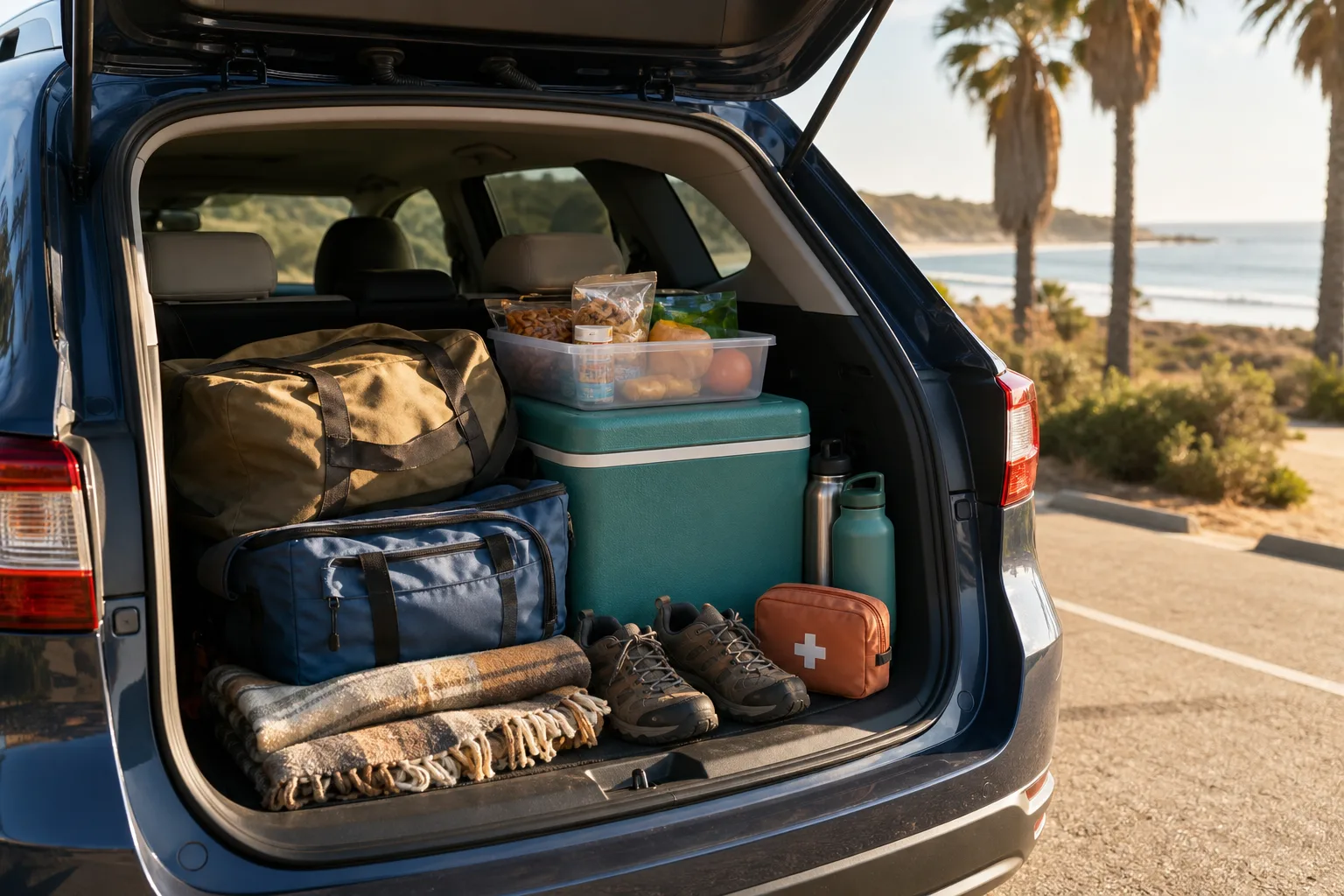
Do not bury the things you will need before check-in. Put a small day bag behind the front seat or on top of the trunk stack, then keep reservation details handy if you booked camping through Recreation.gov.
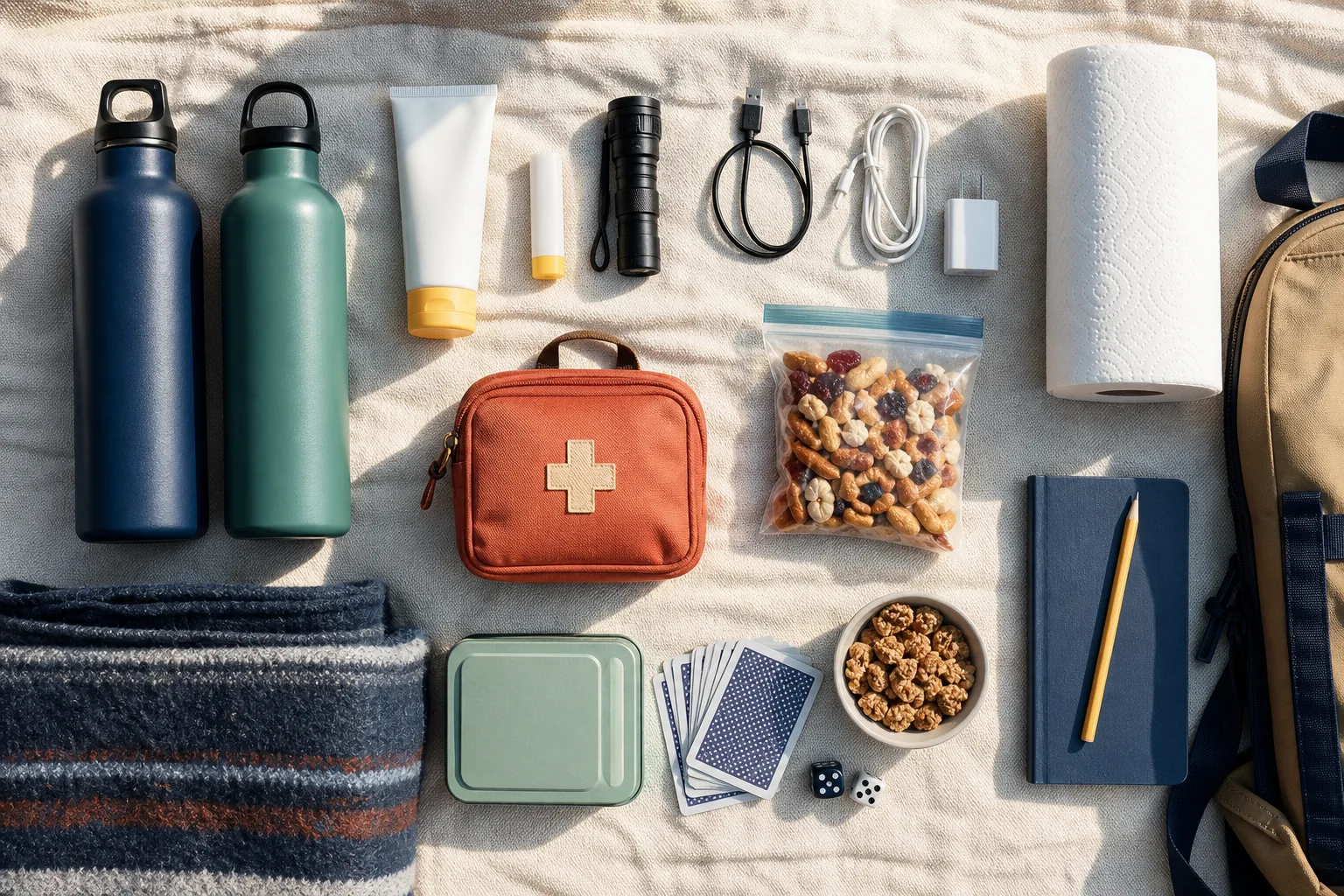
Pack by job
Neck pillows, light blankets, layered clothing, eye masks, and a small pouch for motion sickness, allergies, headaches, and daily medication.
Cooler, ice packs, protein snacks, fruit, refillable bottles, utensils, paper towels, wet wipes, and separate bags for trash and laundry.
Tire gauge, jumper cables or jump pack, flashlight, reflective triangle, first aid kit, spare fluids, and a real paper map for dead zones. If you are headed onto forest roads, read USFS Know Before You Go before you pack.
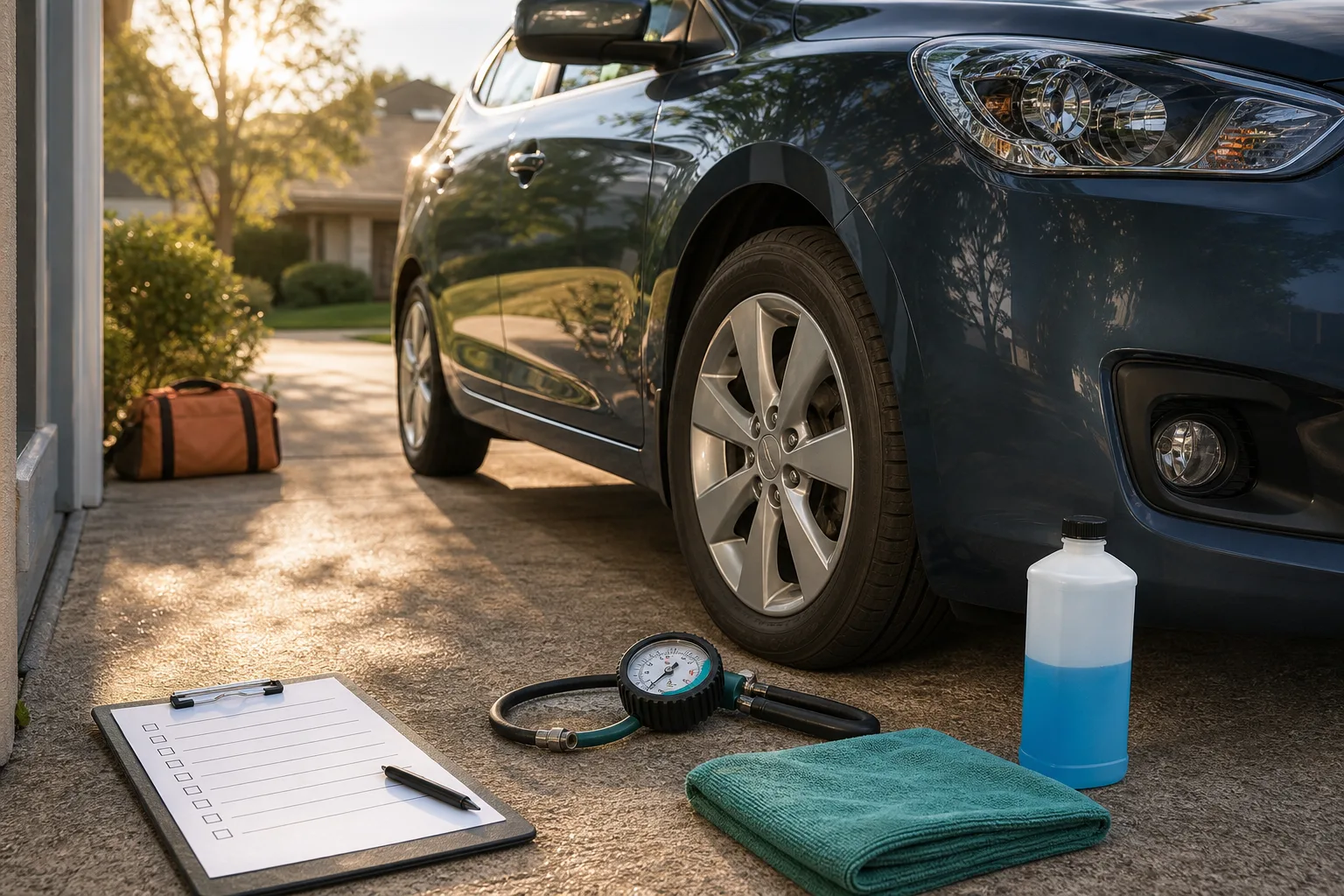
Do this before luggage blocks the spare: check tire pressure and tread, oil, lights, wipers, washer fluid, registration, spare tire tools, and the emergency kit. If your route includes public lands or remote weather, keep the Ready.gov car kit basics in the trunk.
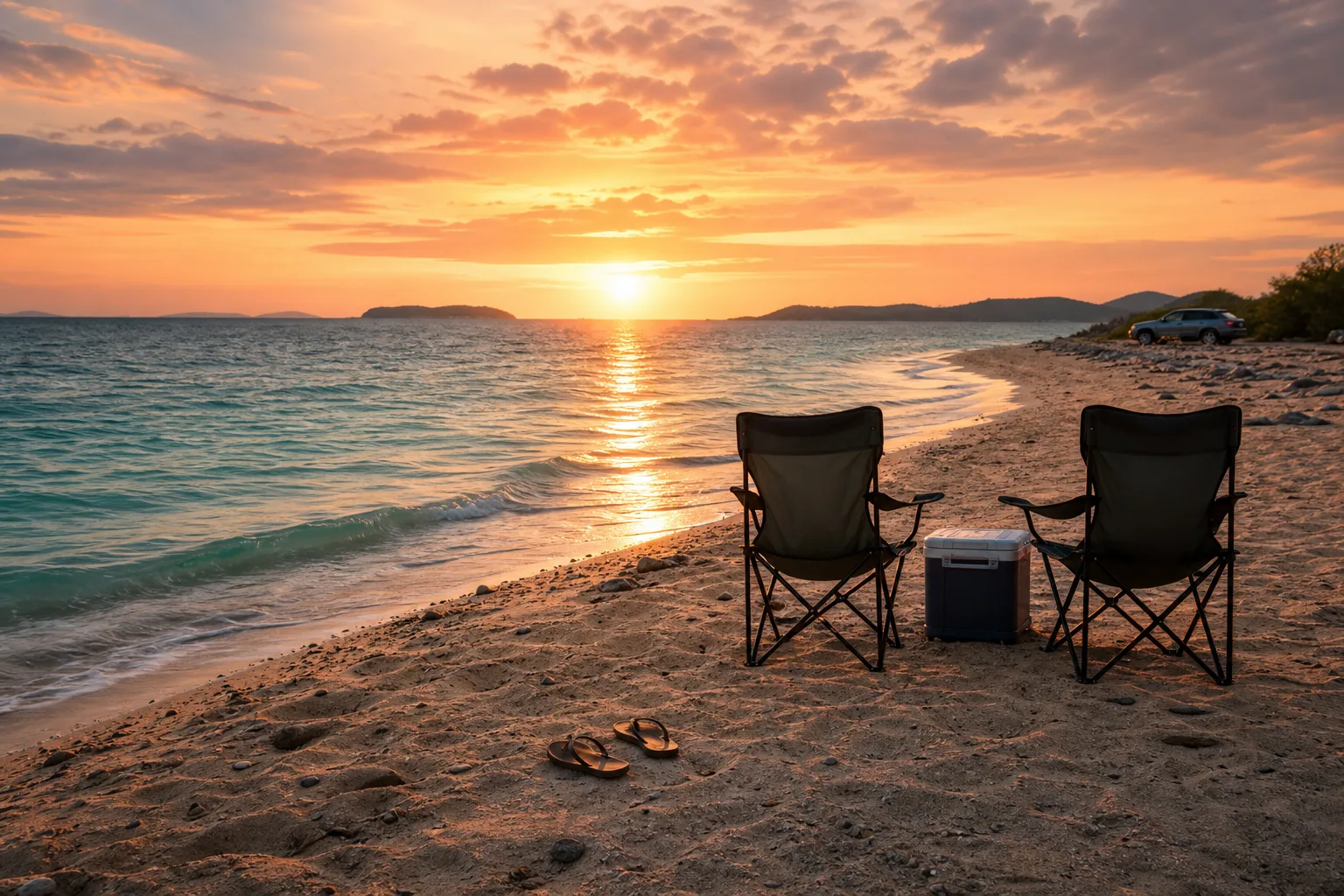
Keep swimsuits, towels, sandals, picnic blanket, and a change of clothes easy to grab. If you are eating or camping in bear country, review NPS bear safety and store scented items the way the site requires.